
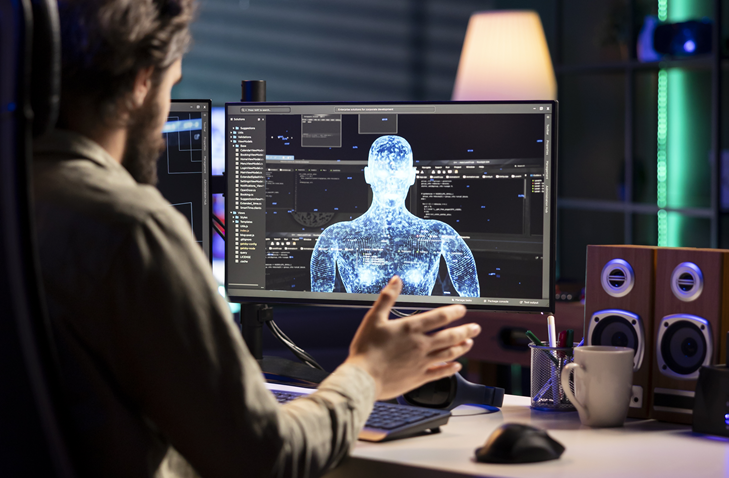
Artificial Intelligence (AI) is no longer a futuristic concept – it is transforming the way we work today. From automating repetitive administrative tasks to generating reports, analysing data, writing code, and even assisting with customer service, AI has become an integral part of workplaces across industries.
While many professionals worry that AI will replace jobs, the reality is more nuanced. AI is changing the nature of work rather than eliminating the need for people altogether. In fact, as technology becomes more capable, uniquely human skills are becoming increasingly valuable.
For both employers and job seekers, success in the modern workforce will depend on finding the right balance between technological capabilities and human expertise. At The GMP Group, we believe that embracing AI while strengthening essential human skills is the key to building a resilient and future-ready workforce.
AI Is Changing Jobs – Not Eliminating Humanity
The rapid adoption of AI has undoubtedly reshaped many industries.
In Singapore and across the region, businesses are using AI to improve productivity, reduce manual work, enhance customer experiences, and make better decisions through data analytics. Industries such as healthcare, manufacturing, banking, engineering, logistics, retail, and technology are already seeing significant transformation.
Tasks that involve the following can increasingly be handled by AI systems:
- Data entry
- Scheduling
- Basic customer enquiries
- Document summarisation
- Report generation
- Inventory monitoring
However, AI still has limitations.
It cannot genuinely understand human emotions, build authentic relationships, navigate complex ethical dilemmas, or inspire people through leadership. These capabilities remain uniquely human – and they are becoming even more important as automation increases.
Instead of competing against AI, professionals should focus on developing the skills that complement it.
Why Human Skills Are Becoming More Valuable
As AI takes over routine and repetitive work, employees are expected to contribute in areas where technology cannot. Employers are increasingly hiring people who can:
- Think critically
- Solve complex problems
- Communicate effectively
- Collaborate across teams
- Lead with empathy
- Adapt to change
- Build trust with clients and colleagues
These are often referred to as human skills, soft skills, or power skills – and they are becoming key differentiators in today’s hiring market.
Let’s explore the human skills that matter most in the AI era.
1. Emotional Intelligence (EQ)
One of the greatest strengths humans possess is emotional intelligence. EQ involves understanding emotions – both your own and those of others – and using that understanding to build positive relationships. Professionals with strong emotional intelligence can:
- Resolve workplace conflicts
- Build trust with clients
- Motivate team members
- Handle stressful situations
- Communicate with empathy
AI can analyse sentiment in text, but it cannot genuinely empathise with someone facing workplace challenges or inspire confidence during uncertain times.
This is especially important for leaders, recruiters, HR professionals, managers, healthcare workers, educators, and customer-facing roles.
2. Critical Thinking
AI can provide recommendations, but humans must determine whether those recommendations are accurate, ethical, and appropriate. Critical thinking involves:
- Evaluating information objectively
- Identifying assumptions
- Analysing risks
- Making sound decisions
- Asking the right questions
As AI-generated content becomes increasingly common, professionals who can verify information and exercise sound judgment will be highly sought after.
Rather than accepting AI outputs at face value, successful professionals will know when to question them.
3. Creativity and Innovation
AI can generate ideas based on existing data, but genuine innovation often comes from human imagination. Creative thinking enables people to:
- Design new products
- Improve business processes
- Develop marketing campaigns
- Solve unique customer challenges
- Create competitive advantages
Innovation often happens by connecting ideas from different experiences, industries, and perspectives – something humans excel at.
Businesses that encourage creativity alongside AI adoption are likely to outperform competitors that rely solely on automation.
4. Communication Skills
Despite technological advances, communication remains at the heart of every successful organisation.
Employees must communicate effectively with:
- Customers
- Colleagues
- Management
- Business partners
- Stakeholders
Strong communication includes:
- Active listening
- Clear writing
- Presentation skills
- Negotiation
- Persuasion
While AI can draft emails or reports, meaningful conversations, relationship building, and difficult discussions still require human understanding.
5. Adaptability
Technology evolves quickly. The tools we use today may be replaced within a few years, making adaptability one of the most important career skills. Adaptable professionals:
- Learn new technologies quickly
- Embrace workplace changes
- Remain resilient during uncertainty
- Continuously upgrade their skills
- Stay open to new opportunities
Employers increasingly value a growth mindset over static expertise. Those willing to learn will remain relevant regardless of technological change.
6. Collaboration
Modern workplaces rely on cross-functional teams. Projects increasingly involve collaboration between people from different departments, countries, and specialisations. Successful collaboration requires:
- Respect
- Trust
- Open communication
- Conflict resolution
- Shared accountability
Interestingly, AI is becoming another “team member.” Employees now need to know how to collaborate not only with colleagues but also with AI tools to maximise productivity.
7. Leadership
Leadership extends beyond managing people. Modern leaders inspire, coach, and empower teams through periods of change. Great leaders demonstrate:
- Vision
- Integrity
- Accountability
- Empathy
- Decision-making
- Strategic thinking
While AI can provide data-driven insights, leadership still requires human judgment, emotional awareness, and the ability to unite people around shared goals.
AI Literacy Is the New Digital Literacy
Developing human skills does not mean ignoring AI. Instead, professionals should become comfortable using AI responsibly. AI literacy includes understanding:
- What AI can do well
- Where AI has limitations
- How to verify AI-generated information
- Data privacy considerations
- Ethical use of AI
- Responsible decision-making
The most competitive professionals will combine technical knowledge with strong human capabilities. Rather than fearing AI, they will use it as a productivity partner.
How Employers Can Build an AI-Ready Workforce
Organisations also play an important role in preparing employees for the future. Forward-thinking employers should invest in:
Continuous Learning –Offer training in both technical and human skills to encourage lifelong learning.
AI Upskilling –Provide opportunities for employees to learn how AI tools can improve productivity and efficiency.
Leadership Development –Equip managers with coaching, communication, and change management skills.
Psychological Safety –Create environments where employees feel comfortable experimenting, asking questions, and learning from mistakes.
Skills-Based Hiring –Look beyond qualifications alone. Hiring based on demonstrated skills, learning ability, and adaptability often results in stronger long-term performance.
What Job Seekers Can Do Today
If you’re preparing for the future of work, consider these practical steps:
Invest in lifelong learning. Take courses in AI, digital tools, communication, leadership, or project management.
Strengthen your emotional intelligence. Practice active listening, empathy, and constructive feedback.
Build problem-solving experience. Volunteer for cross-functional projects that require analytical thinking.
Stay curious. Read about emerging technologies and industry trends.
Learn how to use AI effectively. Become familiar with productivity tools while understanding their limitations.
Develop your personal brand. Highlight both technical expertise and human skills on your resume and LinkedIn profile.
The Future Belongs to Humans Who Work Well with AI
The future of work is not about humans versus machines. It is about humans working alongside intelligent technologies to achieve better outcomes.
AI will continue to automate routine tasks, but qualities such as empathy, creativity, leadership, collaboration, ethical judgment, and adaptability remain difficult to replicate.
For employers, investing in people will remain one of the smartest business decisions.
For professionals, developing both AI literacy and human skills will open doors to exciting new career opportunities.
At The GMP Group, we have spent more than three decades connecting talented professionals with leading employers across Singapore and the region. As workplaces continue to evolve, we remain committed to helping organisations build future-ready teams and empowering job seekers to thrive in an AI-driven world. The future belongs not to those who fear AI – but to those who combine technology with the qualities that make us uniquely human.